Star Wars: A New Dawn
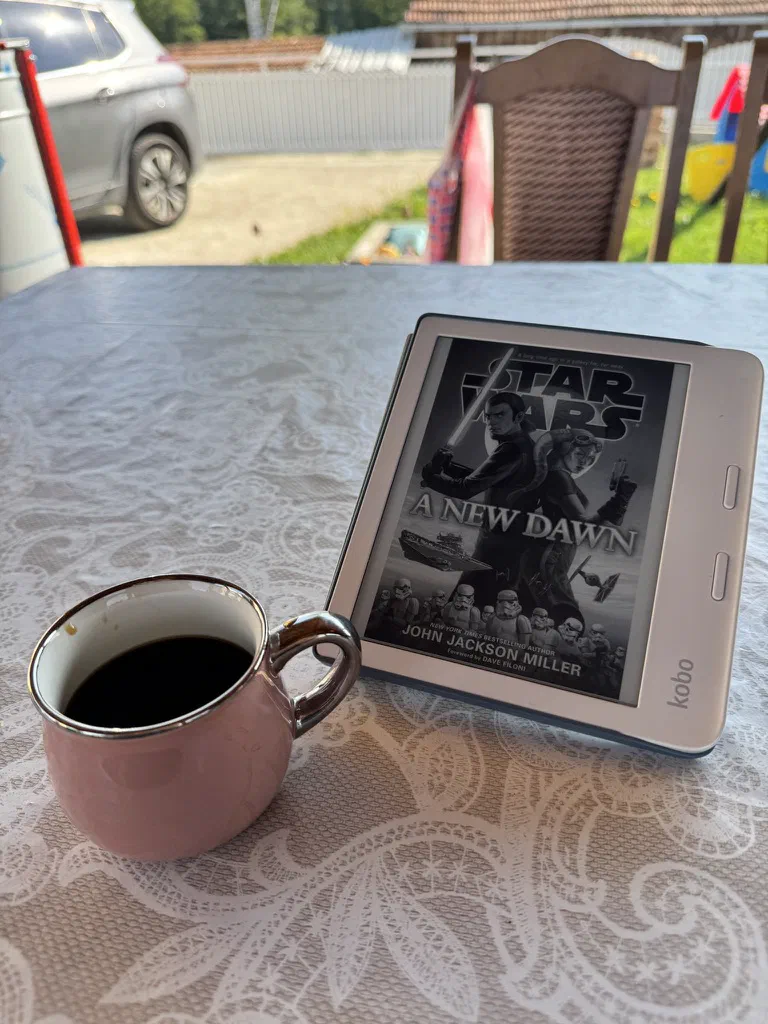
As a kid, the Star Wars trilogy VHS tapes were played over and over growing up. Remastered, of course. In fact, they called the VCR home more than any other tape at the time, and I had options. Not a lot, but I had options. The remastered versions had these 10 minute preambles talking about how some of the special effects were redone for the remastered version. There were interviews. The production team talked about how they did what they did. There were comparisons with the original… And you couldn’t skip this. I didn’t want to. Toward the end of the preamble I still remember the voiceover going NOW SIT BACK AND GET READY, and there would be a supercut of everything that was going to follow with John Williams hammering it into me. Little me was so hyped up that at that point I was usually jumping up and down on the bed. I loved it. I loved Star Wars. Still do.
In the past year or two I had learned that Disney reset their lore canon. There is a huge debate online amongst the fanbase, and it’s one that I strangely don’t have an opinion on. I can’t. Despite being a huge Star Wars fan, apparently I was never big enough a fan to have read any of the books. Since I usually read more than one book at a time, an opportunity recently presented itself with a slot for some lighter reading. I was going in for some surgery and really wanted to take my mind off of the whole thing. And what better way than reconnecting with my childhood?
I enjoyed this first book more than I thought I would. I think every fan at some point wonders how the Empire actually manages to sustain itself. Did you know that tens of millions of populated systems actually make up the Empire? How does it manage the politics, the economy, and the resources to not just build everything for that scale but maintain it too? A New Dawn answers part of this question, and focuses on thorillide, a rare mineral used to manufacture and maintain weapon systems for ships like Star Destroyers. Cool. The moon of Cynda is found to be particularly rich in it, enough to sustain the Empire for a long time. The conflict revolves around the mining operation itself. No spoilers here, I promise.
Both Hera and Kanan, the book’s main characters, are interesting and feel believable. Their banter is fun, and given that this period is still early days for the Rebellion, watching its formation in cells like this really imparts the grass-roots aspect of it all. It’s just regular people with a grievance, and the will to do something about it. Honestly, it’s a miracle the Rebellion even eventually succeeds in the movies. So many things have to go right. Or at least not very wrong. And that’s another thing I thought was particularly well-crafted. Far more things go wrong than they do right in the book. And that’s without any sort of deus ex machina. There’s a very MacGyver undercurrent that permeates every part of the plot, which is not just necessary because the Rebellion has no resources, but also a lot of fun.
It felt like Star Wars. John Jackson Miller does a great job of capturing this feeling. It really could be a movie. The pacing is solid, the characters memorable, and nothing seems out of place for a Star Wars book. All in all, I would recommend it for first-time readers, and for fans who hate everything about the lore reset.